
What does a lifting belt do?
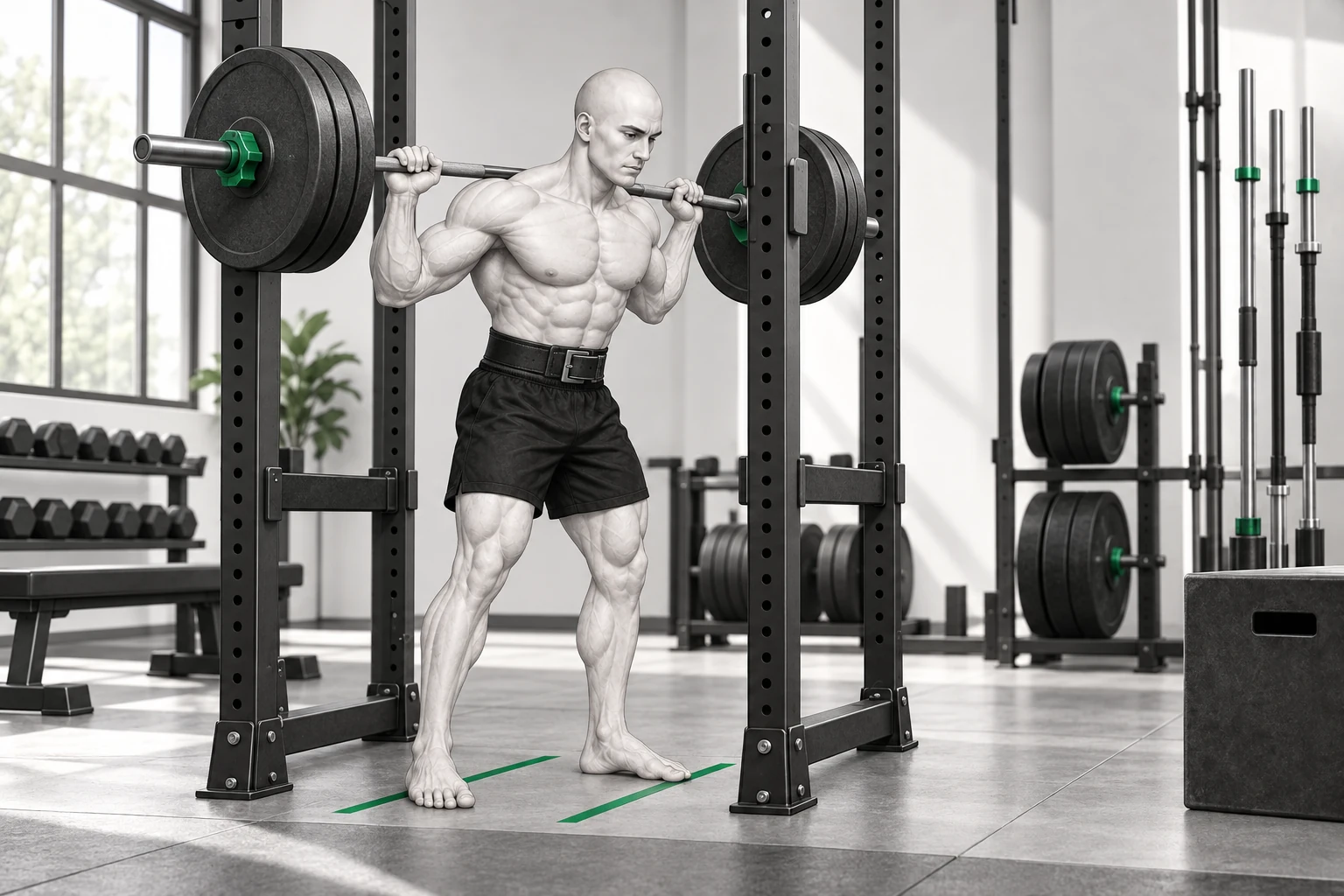
A lifting belt is a rigid or semi-rigid band worn around the torso for certain exercises. It does not lift the load for you. It gives you a surface to push against with your abdominal muscles while bracing, which may change how the effort feels and how much force you can produce.
It should not replace preparatory breathing or a position you can control. To distinguish an equipment choice from a change in exercise variation, also read the guide to choosing between sumo and conventional deadlifts and the guide to lifting straps : these accessories address different needs.
What do studies show with and without a belt?
In an 2026 crossover study, 11 resistance-trained adults performed three sets of eight deadlifts at 70% of their maximum, trying to lift the bar as fast as possible. Mean bar velocity was higher with a tight belt than with a loose belt or no belt; perceived effort was lower than with no belt. This acute test does not show whether a belt improves progress over several weeks.
In another study, 20 men who performed deadlifts tested different combinations of belts and straps. A belt alone shortened deadlift completion time compared with no aid and reduced perceived effort. The authors measured one session and one exercise; they did not measure long-term progress or injuries.
What the evidence shows: in these protocols, a belt changed some immediate performance measures. What remains uncertain: how large the effect would be for another person, exercise, or several-month program. These findings do not show that a belt is required, prevents injuries, or builds more muscle.
When should you wear a belt, and when should you take it off?
| Situation | Practical choice | What to check |
|---|---|---|
| Heavy squat or deadlift set | Try a belt if it helps you brace and keep the bar path stable. | Reps remain controlled and repeatable. |
| Easy or warm-up set | You can train without a belt. | You keep the same setup and preparation. |
| The belt gets in the way at the start or bottom of a squat | Adjust its position or take it off. | No pinching or unintended change in range of motion. |
A belt should not force you to shorten the movement, arch more, or hold your breath longer than planned. If a lift feels unstable, reduce the load and return to a version you can control.
How should you position and test a belt?
- Position it around your trunk. It should stay in place without blocking your breathing or causing painful pressure. Height depends on your build and the exercise: check that it does not dig into your ribs or hips as you move.
- Learn to brace against it. Breathe in and brace your trunk before starting the rep. Create pressure around your abdomen, rather than pushing only your stomach forward.
- Start with a familiar load. Do not test a maximum simply because you are wearing a belt. Perform a few normal reps and check that you can keep your usual movement.
Width and stiffness are mainly fit considerations: choose a belt that stays in place, is easy to adjust, and does not interfere with your positions. Price or thickness alone cannot predict better results.
How can you tell whether it actually helps?
- Choose a consistent exercise, such as the barbell back squat or the conventional deadlift.
- Across several workouts, compare sets with similar loads, reps, rest, and effort, with and without a belt. Change one variable at a time.
- Record load, reps, RIR, and whether you wore a belt. Also compare bar-path consistency and whether the belt gets in the way.
One better set may reflect normal variation. To decide, look for the same benefit across comparable workouts. The guide to measuring your progress and the guide to what to record in your workout log help keep your comparison useful.
So, should you train with a belt?
You can train without one; there is no required benefit to miss. Try a belt if you perform demanding squat or deadlift sets and it helps you brace or repeat your effort. Wear it only for the sets where it adds value, then check that your movement stays consistent.
Log both options in ShapeVision, then keep the approach that lets you train consistently. The workout log tracks your sets; morphology analysis and personalized program generation complement it.
Top 3 lifting belts by use case
This ranking compares three adjustment styles, not measured strength gains. Choose by freedom of movement and how easily you can repeat the same tightness. Sizes and availability vary by Amazon listing.
| Rank and model | Advantages | What to check | Affiliate link |
|---|---|---|---|
Rank and model 1. RDX 10 mm lever belt 1. RDX 10 mm lever belt | AdvantagesStiff 10 mm leather, consistent 10 cm width, and a quick lever closure: useful for repeatable tightness on heavy sets. | What to checkHarder to readjust between waist measurements; check that the 10 cm width does not pinch your ribs or hips. | Affiliate linkView on Amazon ↗ |
Rank and model 2. Fitgriff Classic leather belt 2. Fitgriff Classic leather belt | AdvantagesDouble-prong buckle and more flexible leather than a 10 mm powerlifting belt: adjust by holes without moving a lever. | What to checkSlower to fasten; measure your waist using the seller’s sizing guide. | Affiliate linkView on Amazon ↗ |
Rank and model 3. Fitgriff V2 neoprene belt 3. Fitgriff V2 neoprene belt | AdvantagesLight, flexible, continuously adjustable with hook-and-loop and a self-locking buckle: practical when switching exercises and tightness. | What to checkFeels less rigid than a thick leather belt; check closure grip and sizing. | Affiliate linkView on Amazon ↗ |
Amazon affiliate links. As an Amazon Associate, I earn from qualifying purchases. This ranking uses manufacturer-stated features; the three models were not independently tested side by side.
Sources and methodology
The two studies below were read in full. They measure immediate effects during specific tasks in small samples; they do not show that a belt prevents injuries or increases long-term muscle growth. The decision criteria in this guide are practical pointers.
Frequently asked questions
Should I wear a belt while learning to squat?
It is not necessary. First learn to repeat a controlled position and range of motion. You can try a belt later with a familiar load and compare, without assuming it will fix your technique.
Does a lifting belt protect your back?
The studies cited here did not test injury prevention. They report acute differences in speed, completion time, or perceived effort under specific protocols. A belt should not be presented as a guarantee of safety.
Should you wear a belt for every set?
Not necessarily. Choose based on the set and your goal, then use a consistent rule, such as wearing it for main work sets but not warm-ups. Record that choice so you can compare like-for-like sets.