
What do lifting straps do?
Lifting straps connect your wrists to the bar or handle so your fingers no longer support the load alone. They are most relevant when grip becomes the limiting factor before your lats, traps, glutes, or hamstrings do.
A 2026 narrative review concluded that straps can improve some acute deadlift outcomes and reduce grip fatigue. It also highlighted the lack of longitudinal research needed to claim that straps increase long-term strength or hypertrophy.
Practical decision: complete sets without straps while your grip remains reliable. Add them when your hands would end a technically sound set before the muscles you want to train. You do not need them for every exercise or every set.
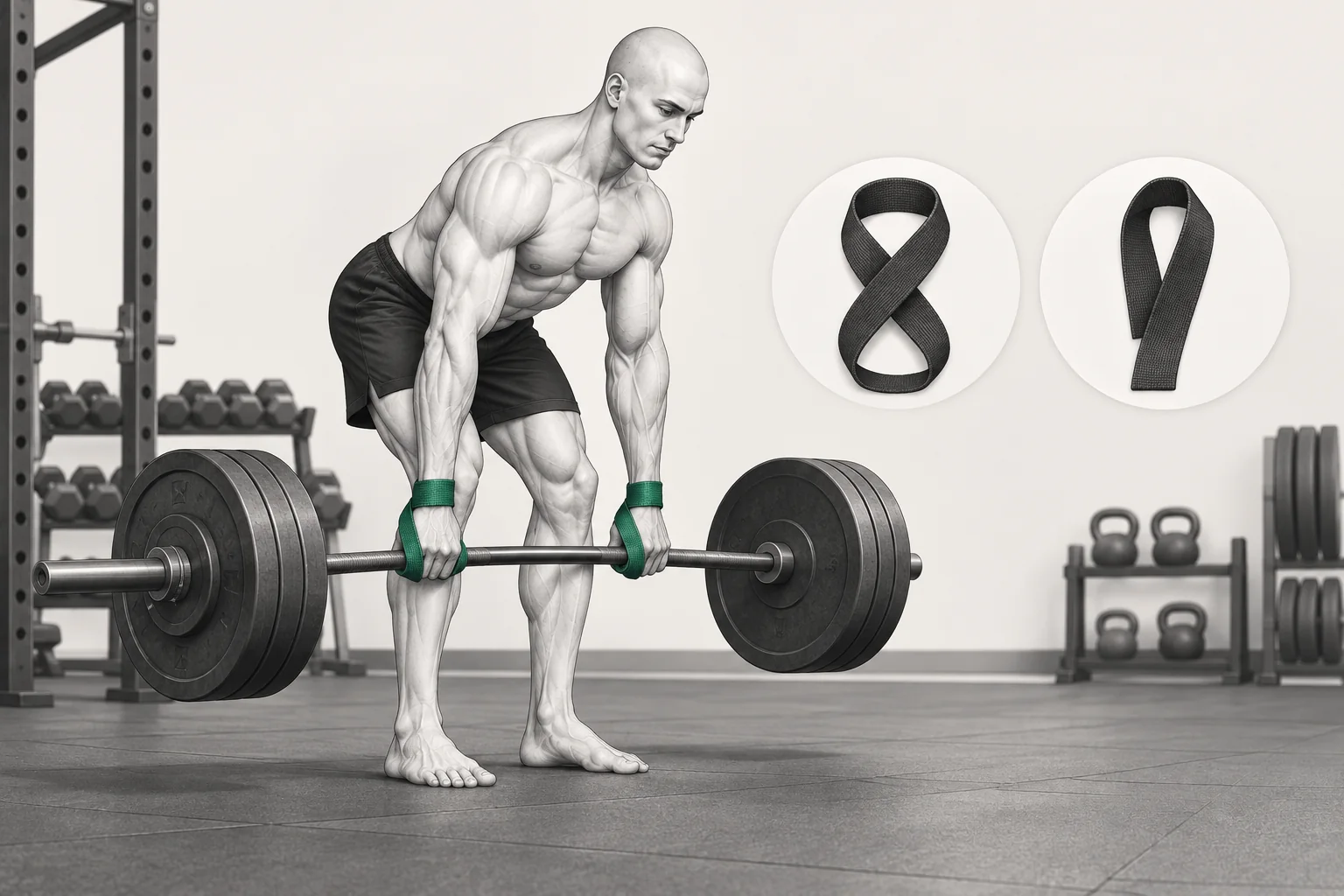
What does research say about performance?
The effect depends on the movement and protocol. In 11 men trained in the deadlift, the condition-specific mean 1RM was 180 kg with straps versus 151 kg without straps. The loads used in the subsequent sets were therefore not identical, and this small trial cannot predict another lifter's result.
In 10 trained women, straps allowed more deadlift repetitions and produced a smaller reduction in grip strength after the sets. By contrast, a lat pulldown trial in 12 men found no difference in 1RM, repetitions, or latissimus dorsi activation.
Correct interpretation: straps are a grip aid whose acute effect appears clearest when a heavy bar is genuinely at risk of slipping. They do not guarantee more repetitions on every pulling exercise and do not prove greater muscle growth.
Which type of lifting strap should you choose?
| Type | Most suitable use | Trade-off | My pick |
|---|---|---|---|
Type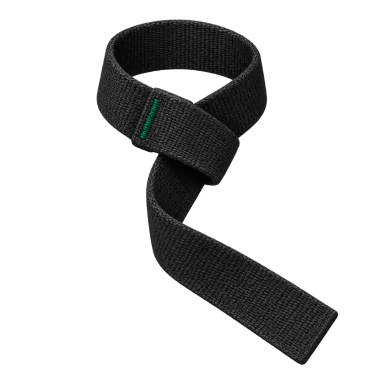 Lasso strap Lasso strap | Most suitable useDeadlifts, rows, and varied pulling exercises | Trade-offAdjustable and versatile, but takes a few seconds to set up | My pick Fitgriff lasso strapsAffiliate link · View on Amazon ↗ Fitgriff lasso strapsAffiliate link · View on Amazon ↗ |
Type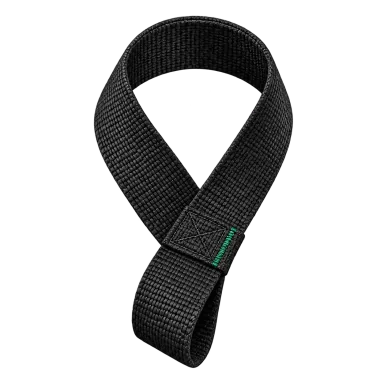 Olympic strap Olympic strap | Most suitable useWeightlifting and exercises that require a quick bar release | Trade-offQuick release, less secure hold | My pick WBCM V1 OlympicAffiliate link · View on Amazon ↗ WBCM V1 OlympicAffiliate link · View on Amazon ↗ |
Type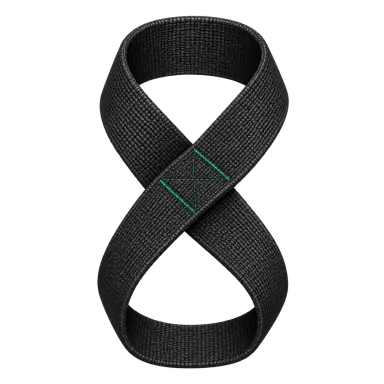 Figure-eight strap Figure-eight strap | Most suitable useVery heavy, controlled deadlifts | Trade-offMaximum security, intentionally harder release | My pick RDX Figure 8Affiliate link · View on Amazon ↗ RDX Figure 8Affiliate link · View on Amazon ↗ |
Type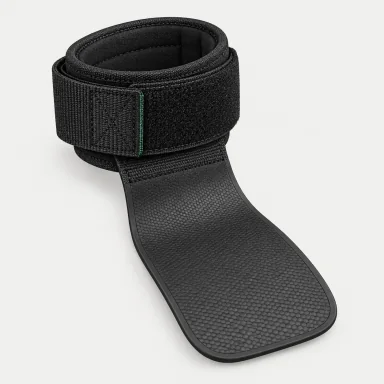 Lifting grip Lifting grip | Most suitable useMachines, pulling exercises, and repeated sets | Trade-offQuick setup, different feel around the handle | My pick Fitgriff Elite 2.0Affiliate link · View on Amazon ↗ Fitgriff Elite 2.0Affiliate link · View on Amazon ↗ |
Type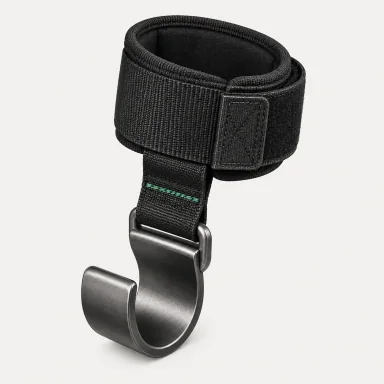 Lifting hook Lifting hook | Most suitable useSituations where firmly closing the hand is difficult | Trade-offMore of the load rests on the hook, reducing contact with the bar | My pick RDX lifting hooksAffiliate link · View on Amazon ↗ RDX lifting hooksAffiliate link · View on Amazon ↗ |
The same 2026 review describes these five categories but found no trials directly comparing their effects on performance or safety. The choices above are therefore a mechanical and practical guideline, not a scientific ranking.
How should you choose straps for each exercise?
- Conventional or Romanian deadlift: start with lasso straps. Switch to figure-eight straps only when security is the priority and you have mastered the release.
- Snatch, clean, or Olympic pull: favor an Olympic strap that releases easily when the bar leaves your hands.
- Barbell row: lasso straps can prevent grip from cutting short a set intended for your back.
- Lat pulldown or machine row: use them only if they genuinely improve the set; research does not show an automatic benefit.
- Heavy shrugs: lasso straps, lifting grips, or figure-eight straps may all work depending on setup time and the level of security you want.
Test them on the conventional deadlift, Romanian deadlift, barbell row or the overhand lat pulldown. Keep each variation consistent enough to measure real progress.
How do you set up lasso lifting straps?
- Feed the end of the strap through the loop so it surrounds your wrist without compressing it.
- Position the tail in line with your palm, on the side opposite your thumb.
- Place your hand on the bar, then wrap the tail under the bar in the direction opposite your fingers.
- One wrap is enough for most sets; tighten it by rolling the bar slightly into your hand.
- Test the setup with a light load before a heavy set.
Do not build up multiple wraps that prevent you from releasing the bar. With figure-eight straps or hooks, first learn how to remove your hands without a load. Published evidence cannot quantify injury risk by strap type; caution about release comes from their mechanics, not from a measured accident rate.
Do lifting straps weaken your grip?
There is no long-term study showing that straps weaken grip. Nor is there evidence that using them all the time preserves it. During a set, they simply reduce the demand placed on the hands and forearms.
If grip strength is a goal, keep some strapless sets with loads you control, then use straps when grip limits the intended work. You can also train grip directly with the farmer's walk, dead hang or the plate pinch hold. The exact split between strapped and strapless sets depends on your priority; no universal ratio has been established.
How can you tell whether straps actually help?
- Choose one exercise, load, and consistent rep range.
- First complete several workouts without straps and record why each set ends.
- Then test the same strap model across several comparable workouts.
- Compare reps, load, the target muscle's RIR, and grip quality.
- Keep using them if they extend the intended work without altering the movement path or masking an excessive load.
The guide to what to record in a strength-training log helps you isolate variables. In ShapeVision, distinguish “no straps,” “lasso straps,” or the model used in your notes so you do not merge two conditions. Then apply progressive overload with consistent technique.
Sources and methodology
Direct evidence remains limited, acute, and focused mainly on the deadlift. It informs grip assistance within a workout, but not long-term strength, hypertrophy, or safety adaptations, nor the superiority of one strap type.
Frequently asked questions
When should you use lifting straps?
Use them when grip fails before the target muscles and cuts an otherwise sound set short. They are most useful for deadlifts, rows, shrugs, and some heavy pulling exercises.
Which lifting straps are best for beginners?
Choose simple, versatile lasso straps. Learn to set them up with a light load before trying a more secure model.
Are figure-eight straps better?
They secure the bar more firmly, but release is harder. They suit some heavy deadlifts; no research proves that they are universally better than other models.
Can you use lifting straps for pull-ups?
Yes, if grip limits your back, but setup is often less convenient than with a barbell at rest. For dynamic pull-ups, avoid any system you cannot release quickly.
Should you use straps during warm-up sets?
Not necessarily. Keep light sets strapless while grip is reliable, then add straps before your hands become the limiting factor. This is a practical rule, not a scientific quota.