What do these three splits mean?
In full body, each session works major upper- and lower-body muscle groups. Upper/lower separates upper- and lower-body days. Push pull legs separates pushing movements, pulling movements, and legs. A split name describes organization, not the amount of work or a guaranteed result.
A three-day push pull legs cycle reaches each group once in that cycle; repeating all three days across six workouts reaches each group twice. Those are different frequencies. With an irregular schedule, continue the session sequence instead of forcing a Monday reset.
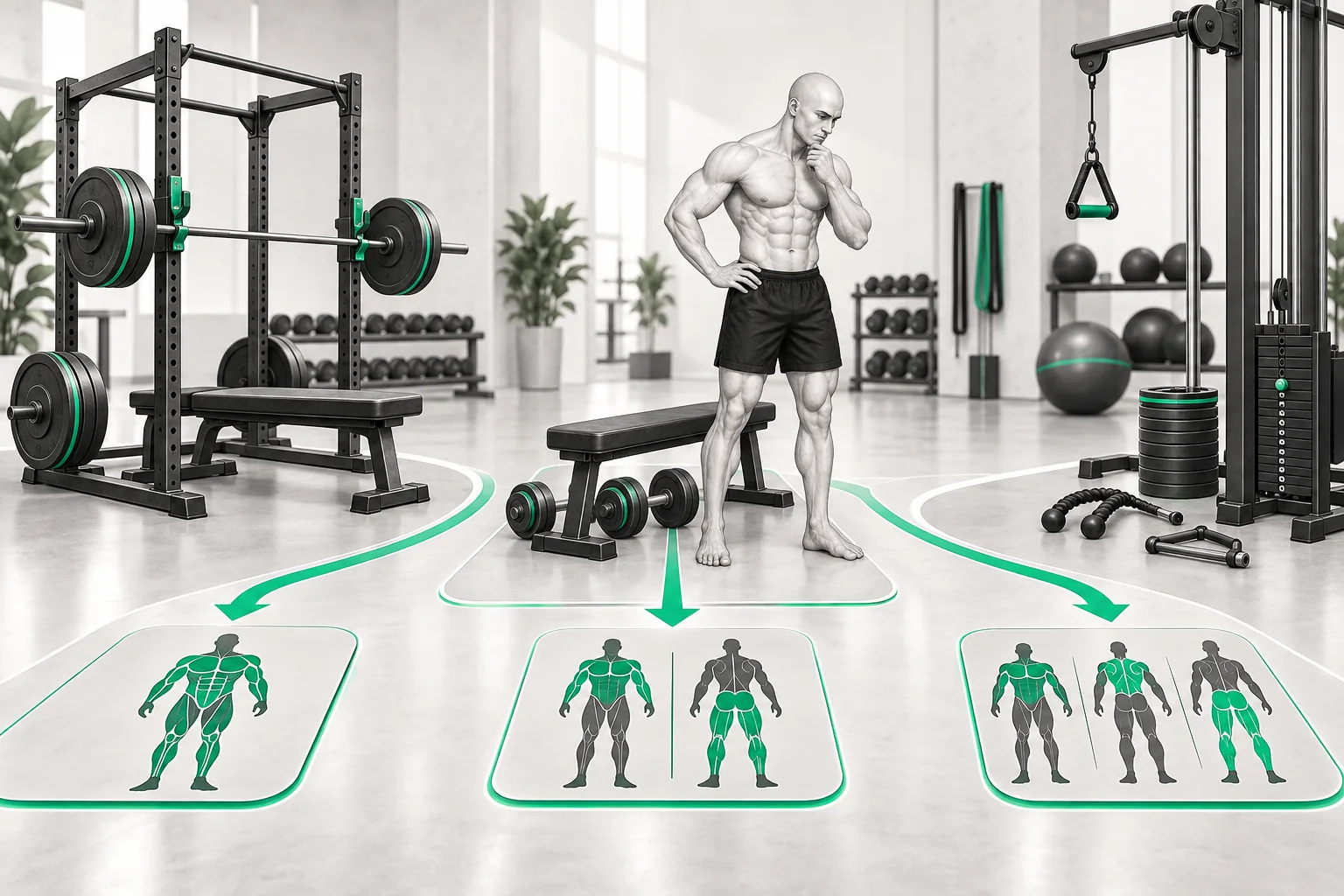
Which split fits your available days?
Two days: start with two full-body workouts. Three days: alternate full-body workouts or run an upper/lower sequence that continues the following week. Four days: two upper and two lower workouts are easy to schedule. Five or six days: upper/lower or push pull legs can spread more work across shorter workouts. These are scheduling examples, not proven physiological cutoffs.
For a two-day schedule, see this two-day program. If you are unsure about workload, start with weekly sets per muscle.
Is one split more effective at equal volume?
In a 12-week randomized trial involving women without recent resistance training, two full-body and four upper/lower workouts produced comparable gains when exercises and weekly sets were matched. This study did not test push pull legs and does not guarantee the same result for every lifter.
Another eight-week trial in 67 adults without regular training compared four full-body workouts with four workouts split into two A and two B days. Measured strength and muscle-thickness gains were similar when weekly sets were matched. This finding concerns the early phase of training and does not rank push pull legs.
How can you tell whether your choice works?
Write out your sessions and count sets for each muscle group over a complete cycle. For example, four pulling sets on Tuesday plus four on Friday make eight pulling sets that week. Then compare the same exercises, loads, and reps across several weeks; if you regularly miss a day or cut sessions short, simplify the split before adding volume.
The guide to training frequency per muscle helps you read the cycle, while the workout log lets you compare the work you actually completed.
Sources and methodology
The trial studied women without recent training and compared two schedules with matched work. The second trial compares two four-day schedules, not push pull legs. The schedules above are practical examples.
Frequently asked questions
Does push pull legs require six workouts?
No. You can rotate the three workouts in order. Six workouts simply repeat the cycle twice in one week; choose a frequency you can maintain.
Should you change splits if a workout runs long?
First check which exercises and sets are essential. If the workout still does not fit your schedule, spread the same work across more available days or reduce the plan to what you can complete consistently.