What should a pre-workout meal contain?
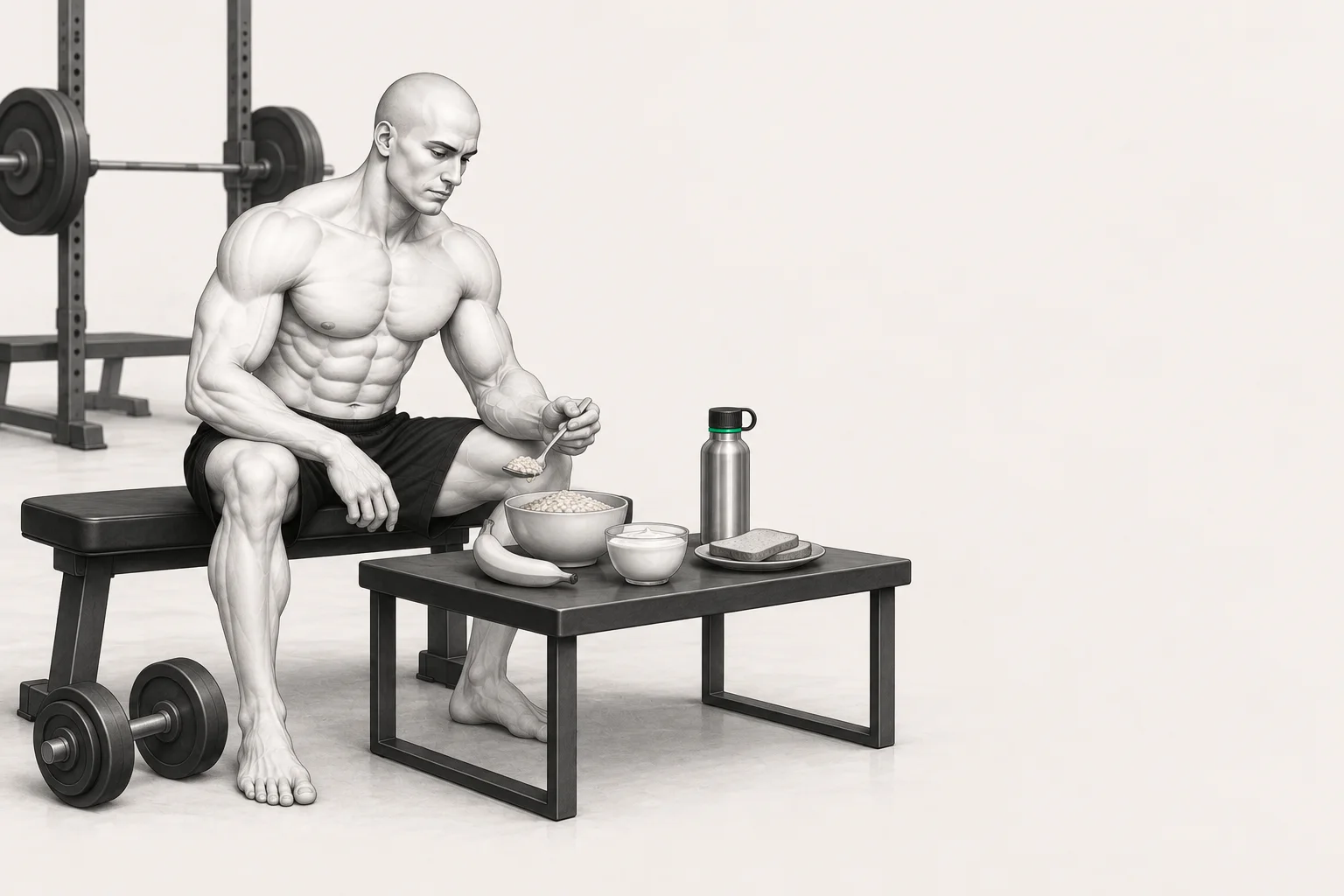
Build a simple meal around three elements. Protein helps you meet your daily total. Carbohydrates provide a practical energy source and may be more useful when you train fasted, perform a very high-volume workout, or have a second intense session planned that day. Water completes the meal without requiring a sports drink.
| Element | Simple options | Practical criterion |
|---|---|---|
| Protein | Yogurt, milk, eggs, chicken, fish, tofu, or protein powder | A portion you already tolerate well |
| Carbohydrates | Rice, bread, oats, banana, fruit purée, or potatoes | Simpler and smaller-volume choices close to the workout |
| Fluid | Water | Drink normally without forcing fluids immediately beforehand |
Fat and fiber are not forbidden. In practice, a large, very high-fat, very high-fiber, or simply unfamiliar portion just before training may feel less comfortable. This depends on your digestion: keep foods that sit well and reduce the meal size first if you feel heavy.
Do pre-workout carbohydrates always improve performance?
No. A systematic review of 49 studies found that 39 showed no significant benefit from carbohydrate manipulation for strength performance or strength development; none of the 16 energy-matched comparisons showed a benefit either. Among the 19 acute studies, 11 found no significant effect.
Benefits appeared mainly in specific contexts: training that would otherwise be fasted, more than ten sets per muscle group, or two demanding workouts on the same day. The review therefore concludes that a high carbohydrate intake is not automatically performance-enhancing for a typical fed-state strength workout.
What the evidence shows: context matters more than a “perfect” food. Practical guideline: if you have already eaten and your workout has an ordinary volume, do not add carbohydrates automatically. What depends on the trainee: hunger, digestive tolerance, workout time, and total workload.
How long before training should you eat?
There is no single validated timing rule for every meal and every lifter. Use this progression as a starting point, then move the meal by 30 minutes or reduce its size if digestion interferes with your first sets.
| Time available | Suggested format | Example |
|---|---|---|
| 2–3 hours | Moderate full meal | Rice, chicken or tofu, well-tolerated vegetables, and water |
| 60–90 minutes | Small meal | Yogurt, banana, and some oats |
| 30–45 minutes | Light snack if needed | Fruit purée or banana with a drinkable yogurt |
| Recent meal, no hunger | Nothing required | Water according to thirst |
The International Society of Sports Nutrition position stand on nutrient timing notes that the size and timing of the pre-exercise meal affect the value of an immediate post-exercise protein feeding. However, it prioritizes total daily intake and protein distribution: do not turn a pre-workout snack into a requirement if your meals already cover the day.
How much protein should you aim for before training?
A review of carbohydrates and strength training cautiously suggests at least 0.3 g of protein per kilogram within the three hours before training. The authors state that these amounts still need validation: this is a guideline, not a universal threshold.
Verified calculation for 70 kg: 70 × 0.3 = 21 g of protein. Aim for about 21 g in a meal or snack using the nutrition label, without requiring that exact number before every workout.
A meta-analysis of protein timing found that total protein intake explained more of the hypertrophy outcome than consuming protein immediately around training. Start with the guide to daily protein intake, then include a serving before training if it fits naturally into your meals.
How should you adapt the meal to the workout?
- Early-morning workout: if a full breakfast does not sit well, test a small snack or train after an evening meal the night before; then compare hunger and performance.
- Very high-volume workout: give carbohydrates more space in the previous meal, especially if one muscle group exceeds ten sets.
- Two intense workouts on the same day: restoring fuel between them becomes more important; plan a proper meal rather than a token snack.
- Fat-loss goal: include the meal within your daily intake instead of automatically adding calories around training.
- Sensitive stomach: reduce the portion, use familiar foods, and move the meal earlier until preparation feels comfortable.
Creatine does not need to become a pre-workout ritual: the guide to daily creatine intake explains why consistency matters more than timing. Likewise, a well-chosen meal cannot compensate for chronically short nights; review the sleep guidelines for strength training.
How do you know whether your pre-workout meal suits you?
- Keep the same timing and a similar meal for three comparable workouts.
- Record pre-workout hunger and any digestive discomfort separately.
- In ShapeVision, compare sets, reps, loads, and RIR on the same exercises.
- If digestion interferes, reduce the portion or eat earlier.
- If hunger appears and performance drops, add a small snack or move the meal closer.
- Change only one variable at a time.
Three workouts are a practical guideline, not a scientific threshold. The guide to what to record in a strength-training log helps you keep comparisons clean. Record meals separately; ShapeVision helps verify whether your chosen preparation is accompanied by stable or improving working sets.
Sources and methodology
Direct evidence on pre-workout meals for strength training remains heterogeneous. The selected sources distinguish the effects of carbohydrates, protein timing, and daily priorities without treating one menu or schedule as universal.
Frequently asked questions
Do you have to eat before strength training?
No. If you ate recently, are not hungry, and train well, you do not need to eat again. Food becomes more useful to prevent hunger or prepare for a long, high-volume workout or one performed after several hours without eating.
Can you train fasted?
Yes, if you tolerate it and performance remains stable. If hunger reduces your effort or the workout is very high-volume, test a small snack before deciding that fasted training suits you.
Banana or oats before training?
A banana is smaller and often convenient close to training. Oats make a more substantial meal and work better with more time. Choose based on hunger and digestion.
Should you avoid fat and fiber?
No. Mainly reduce large portions very close to training if they make you feel heavy or uncomfortable. Individual tolerance matters more than a blanket ban.
Is a protein shake required?
No. Solid food can provide the protein you need. A drink is simply a convenient option when time is short or you do not tolerate a full meal well.