How much protein should you aim for?
The simplest target is 1.6 g/kg/day. For someone who weighs 75 kg, that is about 120 g of protein per day. You do not need to hit the exact same number to the gram every day; consistency across the week matters more.
The 1.4 to 2.0 g/kg/day range lets you adjust for appetite, meal frequency, a calorie deficit, and the proportion of plant-based protein in your diet.
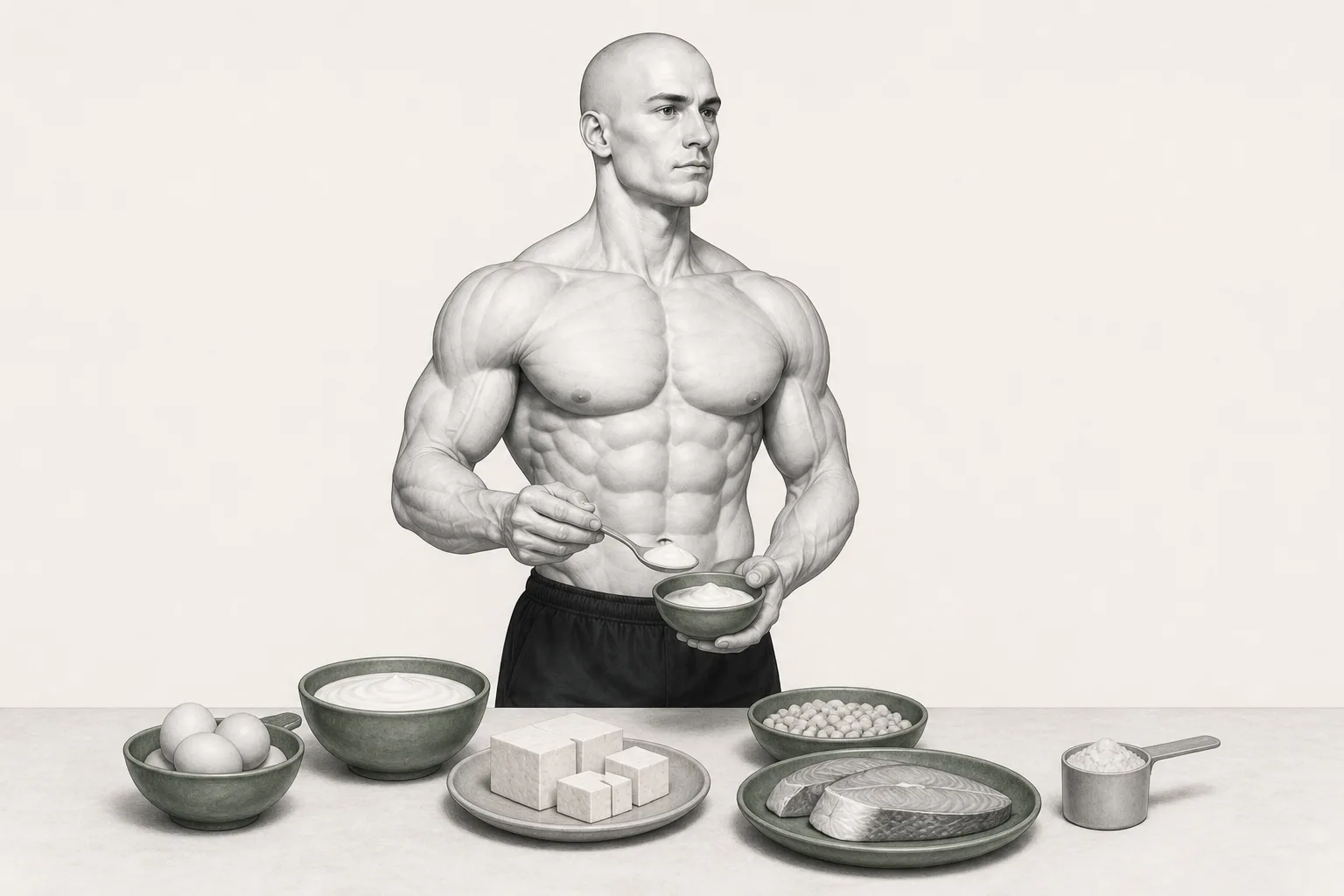
How do you calculate protein needs from body weight?
Use the formula body weight × 1.6 to calculate your central target. The table below also shows the 1.4 to 2.0 g/kg/day range.
| Body weight | Target at 1.6 g/kg | Useful range |
|---|---|---|
| 60 kg | 96 g | 84 to 120 g |
| 70 kg | 112 g | 98 to 140 g |
| 80 kg | 128 g | 112 to 160 g |
| 90 kg | 144 g | 126 to 180 g |
| 100 kg | 160 g | 140 to 200 g |
If your current weight is far from your target weight, use a realistic reference weight to avoid calculating an unnecessarily high target.
How should you distribute protein throughout the day?
Start by reaching your daily total, then distribute it across 3 to 5 meals or snacks. For many people, 25 to 40 g per meal simplifies the day and regularly provides amino acids to the muscles. The guide to protein intake times breaks down what really matters around training and before bed.
| Meal | Example | Approximate protein |
|---|---|---|
| Breakfast | Skyr, oats, and nuts or seeds | 25 to 30 g |
| Lunch | Chicken or tofu, rice, and vegetables | 35-40 g |
| Snack | Quark or a protein shake | 20 to 30 g |
| Dinner | Eggs, fish, or legumes | 30 to 40 g |
Test your day in the protein planner to identify long periods without taking it while awake, without confusing this visualization with a biological measurement.
Which protein sources should you choose?
Build each meal around a main protein source: eggs, fish, meat, dairy, soy, seitan, or legumes. Plant proteins work too; eating a variety of foods makes it easier to obtain a complete range of amino acids and micronutrients.
Protein powder is convenient but optional. Whey, casein, or a plant-based blend mainly helps you complete your daily intake when meals are not enough.
Should protein intake change when bulking or cutting?
During a gaining phase, 1.6 g/kg/day remains a solid baseline when calorie intake is sufficient. During a calorie deficit, the upper end of the range can help preserve lean mass and manage hunger. The Basal Metabolic Rate Calculator provides a starting point for estimating maintenance calories and your calorie target.
Older lifters and people whose diet is mostly plant-based may also prefer the middle or upper end of the range without always aiming for the maximum.
Which Mistakes Should You Avoid?
- increasing protein while ignoring total calorie intake;
- concentrating nearly all of your protein in one meal;
- replacing a varied diet with several shakes;
- assuming more protein can compensate for inconsistent training;
- tracking every gram without leaving room for a sustainable diet.
Simple priority: keep your average intake close to your target, maintain three or four structured meals, and focus your energy on progressing in training.
Sources and methodology
These recommendations combine a meta-analysis of lean-mass gains with a scientific position statement for athletes. Both point to a target close to 1.6 g/kg/day for most lifters.
Frequently asked questions
Is there any benefit to exceeding 2 g/kg/day?
For most lifters, regularly exceeding 2 g/kg/day provides little additional benefit for muscle growth. A more varied diet is often a better use of the remaining calories.
Can the body absorb more than 30 g of protein in one meal?
Yes. The body can digest and use more than 30 g. The 25 to 40 g guideline is mainly a practical way to distribute protein and stimulate muscle protein synthesis regularly.
Do you need a protein shake immediately after training?
No. Your daily total and consistency matter more than a window of a few minutes. A meal or shake around the workout is simply convenient.
Is a high-protein diet suitable for everyone?
Anyone with known kidney disease, who is pregnant, or who has a specific medical condition should determine their intake with a qualified healthcare professional.