What Is a Deload Week?
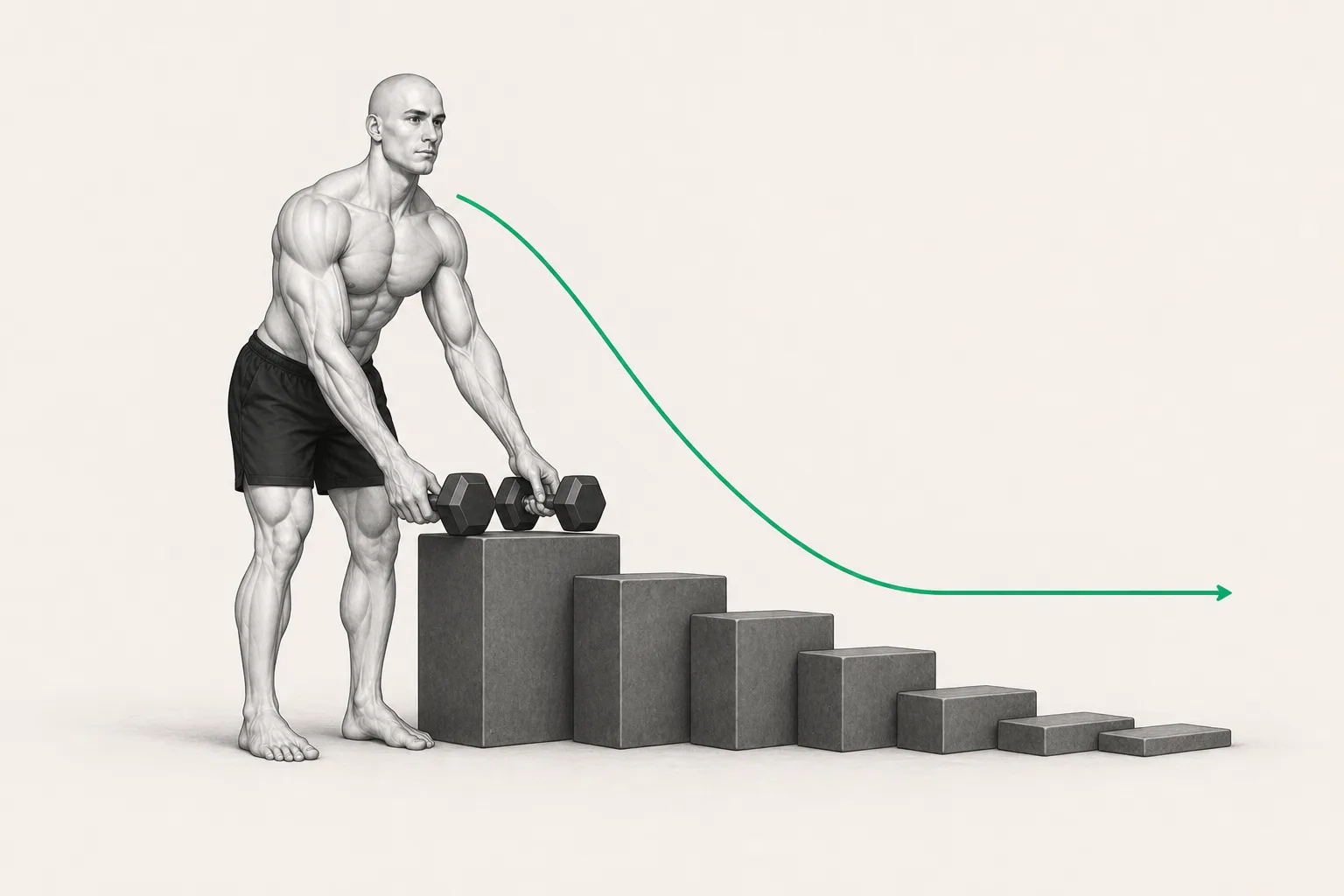
A deload is a short period in which you intentionally reduce training stress. Its purpose is to reduce physical and mental fatigue while keeping your usual movements and workout routine.
It is neither a punishment nor a wasted week. You can keep training with fewer sets, slightly lighter loads, or more reps in reserve.
What Signs Suggest That a Deload Could Help?
- performance declines across two or three comparable workouts;
- soreness or fatigue persists between workouts;
- several joints become unusually irritated;
- motivation and focus decline even though your routine has not changed;
- you are finishing a multi-week block with high volume or effort.
One poor workout is not enough. First check whether your sleep supports recovery, nutrition, and rest periods, then see whether the decline repeats.
How Should You Reduce Training During a Deload?
| Variable | Practical adjustment |
|---|---|
| Number of sets | Reduce by about 30% to 50% |
| Effort level | Keep 4 to 5 RIR |
| Load | Reduce by 10% to 20% if needed |
| Exercises | Keep the program’s core movements and remove the most fatiguing variations |
| Duration | Four to seven days in most cases |
You do not need to reduce every variable as far as possible. Fewer sets performed farther from failure are often enough.
Example: A Normal Week Followed by a Deload
| Normal workout | Deload week |
|---|---|
| Squat · 4 × 6 at 2 RIR | Squat · 2 × 6 at 5 RIR |
| Bench press · 4 × 8 at 2 RIR | Bench press · 2 × 8 at 4 RIR |
| Row · 4 × 10 at 1 RIR | Row · 2 × 10 at 4 RIR |
| Two isolation exercises · 3 sets each | One isolation exercise · 2 easy sets |
Keep your technique consistent. A deload is not the time to test new records or take a set to failure “just to see.”
Should You Schedule a Deload Every Four Weeks?
No. A beginner progressing with moderate volume can simply deload when fatigue calls for it. Advanced lifters, demanding training blocks, or planned preparation phases may benefit from scheduling one in advance.
The right frequency depends on volume, proximity to failure, outside stress, and recovery capacity. A deload should respond to actual fatigue, not a rigid calendar.
How Should You Resume Training After a Deload?
Return to your previous loads with one or two fewer sets if fatigue was high, then rebuild volume across one or two weeks. You can also restart at about 3 RIR before gradually returning to 1 to 2 RIR.
If performance does not return, do not automatically repeat another deload. Check whether the program carries too much volume, an exercise is poorly suited to you, or it is time to change the program.
Sources and methodology
Deloads are widely used but have received limited direct research. These recommendations rely mainly on an international coaching consensus and general fatigue-management principles.
Frequently asked questions
Can You Take a Full Week Off?
Yes, especially if you need the mental break or your schedule requires it. An active deload simply keeps the movements and routine with very little fatigue.
Will You Lose Muscle During a Deload?
One lighter week will not erase your adaptations. It can instead allow your performance to rebound once fatigue has dissipated.
Should You Keep the Same Exercises?
Preferably keep the main movements with fewer sets. Temporarily remove the most irritating exercises or intensive techniques.
Is a Deload Mandatory?
No. It becomes useful when fatigue accumulates or a demanding block ends. Some moderate programs only need an occasional deload.