How can you tell whether a muscle is actually lagging?
A lagging muscle is less developed than the rest of your physique or progresses more slowly despite consistent training. Do not confuse it with a difference between your right and left sides, which is covered in the guide to muscle imbalances.
Check with photos taken under comparable conditions, then see whether performance has stalled on two or three consistent exercises for that muscle. One photo, poor lighting, or a missed workout is not enough.
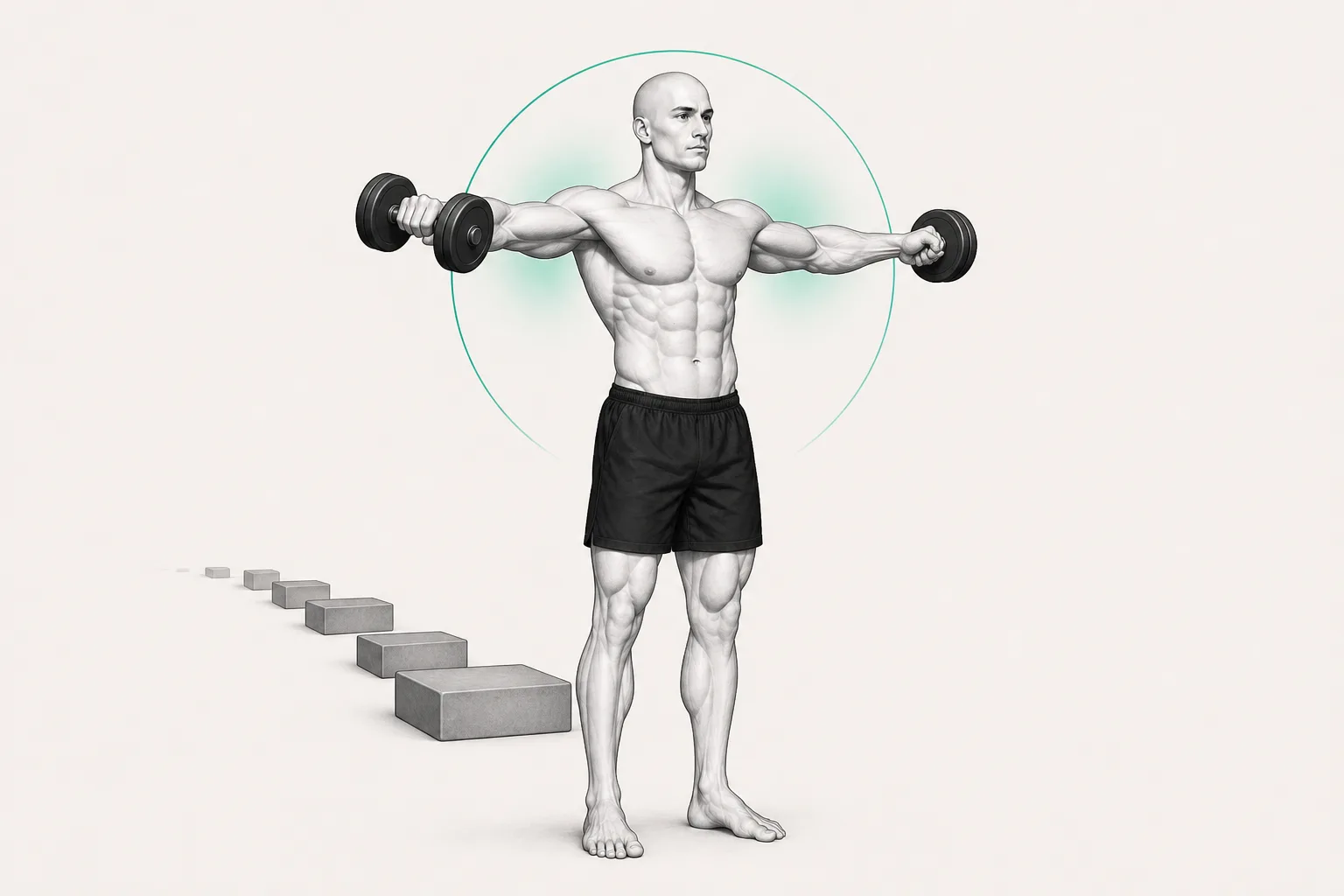
How long should you prioritize it?
Prioritize one muscle for 6 to 10 weeks. This gives you enough workouts to assess progress without reorganizing the program every week.
- Record your current volume and performance for one week.
- Choose two or three exercises you can perform well and progress consistently.
- Move some volume from already dominant muscles to the priority muscle.
- Keep the plan stable and reassess it at the end of the cycle.
How many sets should you add for a lagging muscle?
Do not immediately double its volume. Start by adding or reallocating 2 to 4 direct sets per week, then monitor performance and recovery. Depending on your experience and the indirect work the muscle already receives, you can gradually build toward 12 to 20 working sets per week.
A useful rule: add volume only while reps, loads, or execution quality continue to improve. If these indicators decline for several workouts in a row, the extra volume is no longer productive.
How should you organize the exercises across the week?
Spread the work across two or three workouts to preserve set quality. Place at least one exercise for the priority muscle early in the workout, while you are fresh, especially if you also want to improve its strength.
| Variable | Practical application |
|---|---|
| Frequency | 2 to 3 workouts per week |
| Exercise order | One priority movement near the start of the workout |
| Exercise selection | 2 to 3 complementary, consistent exercises |
| Effort | Challenging sets without sacrificing technique |
| Progression | Increase reps or load before adding more sets |
A exercise library lets you filter variations by muscle and review their execution and key technique cues.
Example: bringing up the side delts
If the side delts are your priority, keep one variation that is easy to progress and another with a different resistance profile. Presses can count as indirect work, but they do not fully replace lateral raises.
| Day | Exercise | Direct sets |
|---|---|---|
| Monday | Dumbbell lateral raises | 4 |
| Thursday | Cable lateral raises | 4 |
| Saturday | Machine lateral raises | 4 |
| Total | 3 weekly workouts | 12 sets |
First progress within the planned rep range. Increase the load once every set reaches the top of the range with clean technique.
How can you tell whether the muscle is catching up?
Use three reference points: comparable photos, performance on the same exercises, and recovery between workouts. Slow visual improvement combined with better performance generally indicates that the plan is working.
At the end of the cycle, keep the volume if the muscle is still progressing, reduce it to maintenance if you reached your goal, or change one variable if nothing improved.
Sources and methodology
This research supports three useful principles: more volume can promote hypertrophy with diminishing returns, exercise order mainly affects exercise-specific strength gains, and exercise variation works best when planned.
Frequently asked questions
How many muscles can you prioritize at once?
One large muscle group, or two small compatible areas, is generally easier to program and track. The more priorities you add, the less each one is truly prioritized.
Should you train the lagging muscle in every workout?
No. Two or three weekly sessions are often enough to distribute the volume well. Set quality and recovery matter more than maximizing frequency.
Should you stop training your strong points?
No. You can reduce their volume to maintenance to free up time and recovery capacity without removing them from the program.
When should you change exercises?
Keep them while they remain comfortable, measurable, and productive. Change a variation if it causes discomfort, fails to target the area well, or stalls despite several consistent adjustments.